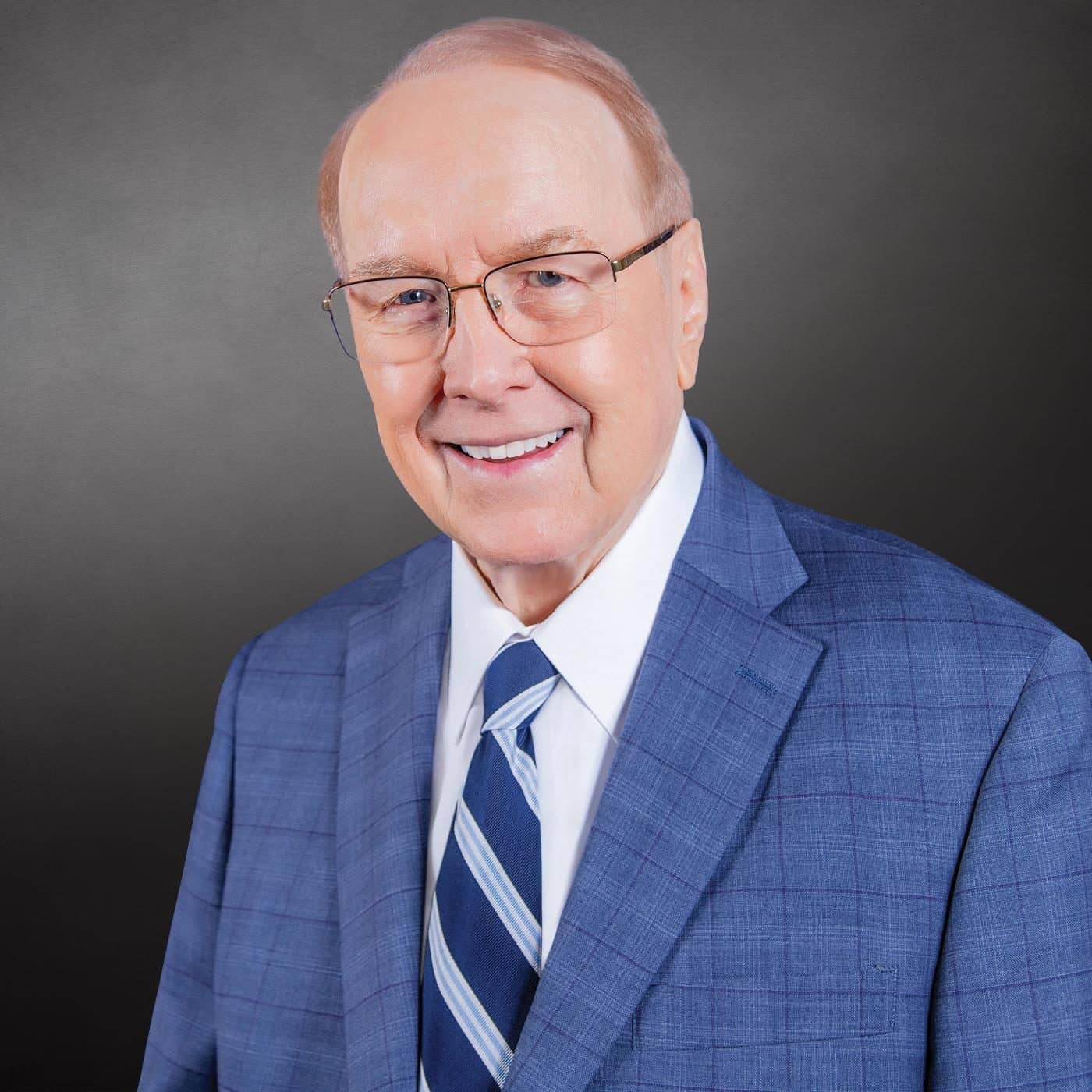
In this powerful episode of Family Talk, Dr. James Dobson continues his conversation with Chuck Colson, exploring the dynamic impact of Christianity and the church’s role in society. Chuck shares poignant stories of conversion and faith that highlight the transcendent power of community and spiritual leadership. Facing today’s cultural wars that threaten to undermine traditional values, Colson and Dobson delve into the challenges pastors face and the need for strong church communities to be beacons of light in a darkening world. Join us for an engaging and inspiring discussion that calls for a united front in the fight for
SPEAKER 02 :
Well, hello everyone. I’m James Dobson and you’re listening to Family Talk, a listener-supported ministry. In fact, thank you so much for being part of that support for James Dobson Family Institute.
SPEAKER 01 :
Welcome to Family Talk, the broadcast ministry of the Dr. James Dobson Family Institute. I’m Roger Marsh, and on today’s program, we are continuing Dr. Dobson’s powerful conversation with his dear friend, Chuck Colson. Now, as you may know, Chuck went home to be with the Lord back in 2012, but in our previous program, Chuck was sharing about his time in prison following the Watergate scandal and how that experience led him to his Christian conversion. Out of that personal transformation, he founded Prison Fellowship Ministries, which now ministers to inmates and their families all around the world. On today’s program, Dr. Dobson and his friend Chuck Colson will be discussing Chuck’s book called The Body and examine the vital role that churches play in spreading the gospel effectively. Let’s join Dr. Dobson right now as he begins part two of this special edition of Dr. James Dobson’s Family Talk. Doctor?
SPEAKER 02 :
Our guest, if you haven’t guessed that by this moment, is Chuck Colson, who is an attorney. He was formerly in the Nixon administration in the White House. He’s been chairman of the board of the Prison Fellowship Ministry since 1984. That ministry is now ministering to prisoners and their families around the world. Chuck, how many people are involved?
SPEAKER 03 :
Oh, there’s hundreds of thousands. I mean, we had over… 150,000 volunteers during the Angel Tree program. We have 46,000 volunteers full time. We have 80 countries. When I was in Korea last fall, listening to the testimonies from around the world, I was absolutely awestruck, not just by the incredible testimonies, but by the realization that I’ve had nothing to do with it. I mean, it’s a movement of God’s spirit. It’s not Chuck Colson, a celebrity, goes to Ethiopia and starts some ministry. A fellow in a prison was converted in Ethiopia in the prison. During five years in prison, he led 3,200 people to Christ. They built a church. The Marxist government is overthrown. And he now is ministering to the guards, 500 of whom have now come to Christ and they build a church among the guards. Now, you listen to a story like that and you realize this is God. Or I got a letter a few months ago, Jim, from the president of Zambia. He was just elected, the first freely elected president. They threw out the Marxist government. President Kawande, who’d been a terrible dictator, was out. And I got this wonderful warm letter from him. I had no idea why. Just thanking me for prison fellowship, encouraging me and hoping I would do well. Well, when I got to Korea, I discovered that the president had been a prisoner and in prison had been led to Christ by prison fellowship volunteers. And when he got out, his marriage was in trouble. And prison fellowship volunteers worked with him and his wife and got their marriage together. And now he’s the president of the country. Well, needless to say, he loves our ministry.
SPEAKER 02 :
Isn’t it fun when you realize you’re just a little peanut in the grand scheme of things?
SPEAKER 03 :
The ministry started in the year that I got out of prison. Actually, we started working in the prisons in 1975. And then I became chairman and others became president because it’s a big job to run it. My job is to go out and to preach and to write books and to now thank you, go on the radio, Jim.
SPEAKER 02 :
Well, you are writing books, and every time one comes off your pen, we ask you to come here and let us kind of premiere it. You’ve just written a book called The Body, Being Light in Darkness. We just got started talking about that at the end of the program last time. This concerns the body of Christ, the church. This is a commentary on where the church is in society today and some of its problems, some of its potential issues. Just began with an overview, Chuck, and then I’ve got some specific questions I want to ask you.
SPEAKER 03 :
Well, I would say this, that I think the prevailing ethos in our culture today is radical individualism. Everybody taking care of themselves and looking out for themselves. To a certain degree, that has penetrated the Christian world. And we begin to think about Christianity as a solitary relationship between me and Jesus. I call it the gospel of Jesus and me. But that’s not Christianity. Christianity cannot be lived apart from the body. When Peter, that decisive moment in the New Testament, that pivotal moment in the New Testament, when Jesus turned to his disciples and said, who do men say that I am? And Peter said, thou art the Christ. And Jesus turned to him and he did not say, blessed are thou, Peter, you’re now born again, saved, go home and live the abundant life. He said, On this rock, I will build my church and the gates of hell will not stand against it. I argue in this book, which is kind of a radical thought in this individualistic era, that you cannot live the Christian life apart from the church, that you cannot experience. I’m going to say this slowly because it’s terribly important. You cannot experience the fullness of God’s grace apart from the church. And therefore, those of us who take a casual view of the church are profaning Christianity. the establishment, the institution which God has supernaturally endowed for the redemption of mankind and for the witness of the kingdom to come.
SPEAKER 02 :
I’m kind of embarrassed to say this is a fairly recent understanding of mine, is that the church is under incredible pressure today. Gary Bauer and I talked about the civil war of values that’s going on, and that on one side you have the media, the entertainment industry, the Congress, the court system, and the White House. You have the professions, the American Bar Association, your profession represented now. Please don’t hang that one around my neck. Or mine, the American Psychological Association. All of these professions are all on the other side. On the side of traditional Christianity, there are only two, only two centers of power, the church and the family. Now, we’ve known the family was struggling. The family is being assaulted. The family was threatened. But until recently, I haven’t fully understood the degree to which the church is being assaulted by hell itself.
SPEAKER 03 :
Well, it certainly is. And we have to recognize that we are in a cosmic struggle, that the crisis is truth. The issue is, is there truth? Remember what Jesus said, I am the truth. And remember Pilate’s disdainful question, because that’s what we deal with every day in our culture today. What is truth? The issue is truth. Is there such a thing as absolute truth? On the front lines of that cosmic struggle is the Church of Jesus Christ. It is the one institution which can battle in our culture for truth. And in here, in this book, I have several chapters devoted to what is the secular worldview, what is the Christian worldview, and then something which most people don’t think about with the Church – The phrase that Paul used in the New Testament when he once described the church as the pillar and support of the truth. That is not just something that is true. That is ultimate reality which is found in Jesus Christ and all that flows from it. So the church is on the front lines, and the church is being assaulted. The church is being beleaguered. The pastors need our support and our help, and the lay people need to get behind their pastor and realize they’ve got to participate and make that church a living, vital organism in their community.
SPEAKER 02 :
The pastor is the focus of our concern now. I have the results of a survey here that I want to share with you. This came from a survey of pastors conducted by Fuller Institute of Church Growth there in Pasadena, California. Listen to these statistics. 70% of the pastors say they don’t have anyone that they consider to be a close friend. 70%, not one close friend. This one just blows me away. 37%. confessed having been involved in inappropriate sexual behavior with someone in their present church. 37% of the pastors have been sexually involved with one of their parishioners in the present context. 40% reported a serious conflict with a parishioner at least once a month. Seventy percent say they have a lower self-image now than when they started. Ninety percent said that they felt inadequately trained to cope with ministry demands. We could take the rest of the program. How can the church be strong if its leaders are going through this kind of chaos?
SPEAKER 03 :
Well, we’re cannibalizing our pastors because we expect everything from them. We expect them to make the church grow because that’s the measure of success in the world today, isn’t it? Growth. Growth. We talk about growth in numbers. We should be talking about growth in spiritual depth and quality. Never confuse technique with truth. Always, if you’re preaching the Orthodox faith and then the church grows, you know it’s a sign of God’s blessing. If you’re not, if you’re growing because of technique, that’s merely man-made. And we should be, if you really want to have church growth, have it the way they had it in the New Testament. In the New Testament times, what happened? Ananias and Sapphira were struck dead. It said fear came across the congregation, and then the church began to grow. After Paul’s preaching, the fear of God came upon the church and it began to grow. Can you imagine a church growth expert coming in today and telling a pastor, the secret to your church growth would be preach on fear of God? Not a one. And yet that’s clearly in the Reformation era. Coram Deo was the rallying cry of the reformers in the presence of God, the imminence of God. If we really treated the church… As the holy body, we would see it grow for the right reasons, not because we have the right marketing techniques. Talk about the pastorate, Chuck. Why are so many pastors struggling in this way? Well, we refuse to respect the pastor’s authority. Now, I think the pastor has to have authority over that church because he is the one ordained by God to speak to that congregation on God’s behalf. He needs to be accountable to the church and held to account. But clearly that pastor needs authority. And the church that I worship in now, when I’m smart enough to be in Florida, the pastor, when he came, an excellent pastor, Dr. Hayes Wicker, when he came, he had a covenant of 25 points, and he wanted it agreed to between the members of the church and himself. And it’s excellent because it spells out exactly what’s expected. And that’s what churches need to do. We are tearing pastors apart in this country. And that’s one of the things I deal with in this book, and it’s shocking.
SPEAKER 02 :
As it says here, 40% have had a serious conflict with a parishioner. That challenging of the pastor’s authority is very typical, and yet I can hear someone saying back through these microphones, you don’t know my pastor. I mean, the guy doesn’t preach anything. It’s watery soup. His leadership is bad.
SPEAKER 03 :
Well, there’s a way to do it, and that’s to get the church governing board, whatever it is, and to sit down with the pastor and talk about where he needs help and lovingly try to see that he becomes what he is supposed to be. The shepherd who oversees the flock which was purchased with the blood of Christ, the church. I mean, when we take a low view of the church, it’s scandalous because it’s that for which Christ gave himself up for the church. But we should lovingly confront him and deal with him so that he does become the one who equips us for battle in the world. That’s primarily what his task is.
SPEAKER 02 :
Deal with this sexual information here. 37% have had an illicit affair. When you think about it, I mean, we’re seeing it. These guys are falling on all sides. The most visible seem to go down the most frequently. What’s behind that?
SPEAKER 03 :
Well, I think it was Henry Kissinger who said power is an aphrodisiac. And I think one of the problems with the power trip that a lot of people get on when they get into the pulpit or when they get into politics or anything else is that one of the areas in which they are most quickly vulnerable is the sexual area. and the temptation is the greatest and the strongest. And so the only defense against that is what the Apostle Paul said. I suspect he might have had similar problems. He was proud, strong, and we don’t know what the thorn in the flesh was that he has to be taken away. But he did say that I died daily, and that gives you a pretty good hint. He had to die to himself daily, to his lusts, his desires, his temptations, and most of all to his pride. And when you put yourself in the proper context, realizing that every breath you take is a breath that is given to you moment to moment by the living God, that you serve only at his pleasure, that your life is without meaning without him, that you are merely his servant, then that kind of puts you back in perspective, gets you off that power and pride kick, and eliminates some of that sexual temptation.
SPEAKER 02 :
You talk in your book about the tendency of the church today to idolize its leaders, to put them on a pedestal. Pedestal complex. Yeah.
SPEAKER 03 :
Well, see, that’s exactly right. And then you get that guy up on the pedestal complex, and all of a sudden he begins to believe the things you’re saying about him and begins to have an inflated view of himself. And the sexual temptation is one that almost inescapably follows from that. But one of the things I talk about in the book and feel very strongly about is the accountability that is necessary in the Christian life. I know you’ve done it, Jim, and I’ve done it. I’ve got certain members of my board, and I tell them, it doesn’t matter what area of my life, it’s open to you. You come in, you look at my books, you ask me questions. Wesley used to have a sole series of questions that he would ask other people in his circles. And penetrating questions. Chuck Swindoll, I quote his in the book.
SPEAKER 02 :
I saw that. Excellent. Name the four or five questions he asked. Can you list them? Have you had an improper relationship? No, wait a minute. Explain it. He’s asking this of his fellow staff members. Yes.
SPEAKER 03 :
They sit around in a circle, and they have seven questions. And they ask one another these questions. They go down the list and it’s all the obvious temptations. Have you lied in sexual immorality? Have you done anything improper this week? They finally get to the last one is have you just lied to me? But they hold one another to account in that way. And I think that is extremely important because I don’t trust myself. And I know how easily pride affected me once before in my life. And could again at this moment or 20 minutes from now. And so I have a group that I hold myself totally accountable to. As a matter of fact, I will make no decision unless they unanimously agree with it. That’s a major decision. A couple of years ago, there was a decision I wanted to make that was important to me. I went to them and they unanimously said, no, and I didn’t do it. And I’m sure that that’s a check on my own baser impulses. I mean, I don’t always know when I’m in the will of God. So you need people that help you. Accountability is the only answer. The church, meaning the universal body of all those whom God has regenerated, is on the front lines because it is the church that is the called out people of God who are to make the witness of the kingdom to come. But then I define this very carefully in the book. There is also the church particular, and that’s the local confessing congregation. And the importance of that is that’s where we come together with total doctrinal agreement, where we administer the sacraments, where we preach the word, and where we’re equipped for service. Now, every church that is equipping its lay people to be ministers of the gospel in their community, to live as salt and light is on the front lines. Because we’re not going to win the battle for the heart and mind of our culture by simply winning political battles. I think what’s happened to us in recent years has demonstrated the utter futility of that. We’re going to win it by one by one winning people over pleasingly to our point of view. We’re never going to win the battle to stop the reckless, shocking murder of one and a half million unborn children every year so long as there are more votes among women who want to be pandered to for their so-called right to choose. And so the live bodies who vote to whom you can say, I give you the right to choose, the right of choice, is always going to win over the unborn children who can’t vote. You’re not going to win that, and you’re not going to win it by political strategies. You’re going to win it by the churches on the front line persuading their people how they can, with a convincing apologetic, stress the dignity of life at every level, not just abortion but euthanasia as well, to their neighbors and win the neighborhoods. The battle for the culture is going to be fought in the neighborhoods block to block, and that’s where the church is on the front lines. That’s where a church equipping its people is on the front lines.
SPEAKER 02 :
The best example of the church on the front lines is the role of the church in the fall of communism. You talk about that a lot in your book. That’s an exciting story.
SPEAKER 03 :
He started to preach the gospel, and this was in 1988, and he soon had 5,000 members in his church. And the church was just vibrant and alive, and the secret police couldn’t stand that kind of growth. And so they started to beat him and persecute him, tried to kill him. And eventually, in the fall of 1989, when communism began to fall in Eastern Europe, The secret police came and they surrounded his church. And Laszlo Tokas said it was a turning point of his life because he looked out the windows and saw the tanks and the secret police. But he also saw the people of his community. of every church, Orthodox, Catholic, Baptist, Presbyterian, Romanians, Hungarians, surrounding that church. And they stood between him and the secret police to protect their pastor. He said it changed his life because all of his old prejudices faded away because he saw that all the people of God were there, the body. Into that crowd one night came a young Baptist lad, 19 years old. His name was Daniel Gavreau. Daniel Garver walked up to his pastor, Peter Dugaluski, and had something under his coat. And Peter said, oh, don’t bring a weapon in here. And young Daniel Garber said, I don’t have a weapon, Pastor. He opened his coat. He had a box of candles. They started lighting candles. They passed them out among the crowd. Some of you may remember who were listening on the radio, seeing the picture in the Timashura Square, thousands of lights at night. And the communists could not stand it because that city was ablaze with the light of the gospel, with God’s people standing there surrounding this church. The next day, Ceausescu couldn’t stand it. He ordered them to open fire. Daniel Gerber, that 19-year-old lad who brought the candles in, had his right leg blown off. Four days later, the pastor went to see him in the hospital. Daniel Gerber was lying there. The pastor said… It must be tough to have lost your limb. And Gavris said, Oh, no, Pastor, but it was I who lighted the first candle. Oh, God, give us the strength and the courage in America to be willing to give our limbs to light the first candle.
SPEAKER 02 :
That’s the church. I’ve been reading about Dietrich Bonhoeffer in the Nazi era and how he just refused to buckle. He never did.
SPEAKER 03 :
And before they took him out and hung him at the Tegel prison, he got on his knees and prayed. And the last scene people saw of Bonhoeffer alive was down on his knees praying at the foot of the gallows while his captors were waiting to hang him. And the story, you know, the Time magazine, and what to me is the ultimate expression of… of naivete in our culture, Time magazine named Mikhail Gorbachev the man of the decade. He wasn’t the man of the decade. Communism fell because the church remained alive behind the Iron Curtain. I’ve been there. I’ve been to Czechoslovakia and to Hungary. I’ve been to Russia. I’ve talked to the people who were in prison. They never wavered in their faith. They knew it was their duty to be the church and that they knew something that we don’t know in this country. They knew that being precedes doing, that there’s nothing you can do that does not flow out of the character of a holy community. And if we really want to change this country, the place to start is in our churches where we become a holy community, where we are living the faith. And from that, we’ll radiate out that light that we saw in the square in Timashore. The light that brought down communism. Boy, that moves me, Chuck. I think it flows, Jim, out of the spiritual strength of the church, of the body of Christ, of the body of believers. In Poland, when the communist officials ordered them to take the crosses off the wall in the classrooms, the Polish schoolchildren took the crosses down and marched through the streets with them. In America, when we ordered the Ten Commandments taken down from the walls of our classrooms, everybody said, ho-hum, take down the Ten Commandments. See, we haven’t had to fight for the most fundamental of our beliefs. And so we’ve been lulled into a sense of false security. We may get that chance, though. Well, at the rate we’re going, I really believe – by every indicator, I really believe this culture today in America has become post-Christian. And when I say post-Christian, what I mean by that is what Francis Schaeffer used to warn us of. That is not that people aren’t going to church. They are going to church. Not that people aren’t being born again. They are being born again. But the fundamental presuppositions of values by which we live in our society are no longer Christian. They’re not the Ten Commandments. They’re not the Golden Rule. People don’t quote Bible verses. They aren’t the basic fundamental propositions of Christian truth. They are hostile. They are radically individualistic. They are selfish. They are anti-communitarian. They are politically correct. They are hostile to the values that we hold dear. And so this culture can no longer be considered Christian. We in the church have got to be the outposts of light in the midst of the darkening culture in which we live.
SPEAKER 02 :
Your subtitle of the book, The Body, is Being Light in Darkness. Yes. Do you see the culture today being dark?
SPEAKER 03 :
I really do, Jim, as you and I were talking about at lunch today. You have the smell of sunset. You have the sense that We’re just seeing a glimmer of light on the horizon and that we really are approaching a dark ages, maybe not unlike the dark ages in the early centuries in Europe. We need to remember because we need to learn from history. It was the church that preserved learning. It was the church that preserved truth. It was the church that preserved civility and schools in the little monastic outposts. And eventually the barbarians fell because the church infiltrated from the monasteries. and went out and infiltrated that culture, and the barbarian hordes retreated, and Europe once again became Christendom.
SPEAKER 02 :
In that lunch that we had together, you said that you felt the presence of the Holy Spirit in his involvement in the writing of this book more than any book you’ve written in a long time. I don’t know, maybe ever.
SPEAKER 03 :
I really did, Jim, in the sense that Loving God was a book that God has used in an extraordinary way in 45 countries of the world. Wherever I go, people, their lives were really impacted by that. I wrote Loving God out of the deep conviction that religion seemed to be continually showing movement upwards and morality downwards. And so the need in Loving God was to write something that was a call for heroic Christian obedience and faithfulness. And the book has been used wonderfully. I couldn’t write that book today because the need is not for individual obedience. The need is for corporate obedience, for the people of God to come together and to unite and to be strong as the body of Christ, which is what this book is about. Not since Loving God have I felt such passion and conviction and anointing of the Holy Spirit in the process of writing a book. It’s a very similar book, as you know from reading it. There’s many stories with some… teaching chapters in between. And it’s a similar book, but it’s a call to the church as loving God was a call to the individual.
SPEAKER 02 :
I would like for you to come back when you’ve got time, when you’re passing through Colorado Springs or anywhere nearby. And I’d like to talk a little more about the family in the context of the present political climate. Oh, I would love to do that. I mean, that’s an area that I’m really concerned about. I know you are, too.
SPEAKER 03 :
As you well know, Jim, I’ve talked about that many times. I think you are absolutely on the front lines. We talk about the church on the front lines. If you break down that family unit, which is the first institution God ordained, civilization stops. It’s done. It’s finished. And I think we’re in grave danger. I see it in the inner cities and the prisons of losing the family. And, of course, in the political debates, it’s a shocking, scandalous phenomenon. failure to even define the traditional family. No one even defines it. And so we’ve got to do it. And that’s where you’re doing it. And that’s where God bless you for it. Thanks for being our guest.
SPEAKER 02 :
And the Lord bless you.
SPEAKER 01 :
Well, today here on this special edition of Dr. James Dobson’s Family Talk, we’ve been listening to a conversation featuring Dr. Dobson and his dear friend, the late Chuck Colson. Now, if you missed any part of today’s program, or if you’d like to go back and listen to part one, simply go to drjamesdobson.org forward slash family talk. That’s drjamesdobson.org. Or you can also hear this broadcast material on the Family Talk app. We’ll be right back. When you make your donation of any amount today, we will thank you by sending you a copy of the book written by Dr. James Dobson and his wife Shirley called Nightlight for Parents. This encouraging devotional is filled with biblical wisdom and practical parenting advice. You can make your donation online when you go to drjamesdobson.org. You can also call us at 877-732-6825. Or if you prefer, you can send your donation through the mail. Our ministry mailing address is Dr. James Dobson’s Family Talk, P.O. Box 39000, Colorado Springs, Colorado, the zip code 80949. Well, I’m Roger Marsh, inviting you to join us again next time for another edition of Dr. James Dobson’s Family Talk, the voice you trust for the family you love. This has been a presentation of the Dr. James Dobson Family Institute.